
Advanced Spinal Decompression in Lake Nona: A Non-Surgical Option for Disc Pain, Sciatica, and Pinched Nerves
A More Advanced Approach to Spinal Decompression Care
Back pain, neck pain, sciatica, and disc-related symptoms can interfere with nearly every part of daily life — sitting, driving, working, exercising, sleeping, and simply moving comfortably. For many patients, the question is not just, “How do I reduce the pain?” but “What is actually causing it, and is there a non-surgical option that makes sense for me?”
At Lake Nona Family Chiropractic & Scoliosis Center, spinal decompression is one of the advanced non-surgical therapies we use for carefully selected patients with disc-related and nerve-related spinal conditions. Our office has invested in a state-of-the-art spinal decompression table delivered in 2026, allowing us to provide precise, comfortable, and individualized decompression care for patients in Lake Nona, Orlando, and the surrounding Central Florida area.
Spinal decompression is not a one-size-fits-all treatment. When performed properly, it begins with a detailed evaluation, an understanding of the patient’s diagnosis, and a care plan that matches the patient’s condition, goals, and tolerance.
What Is Spinal Decompression?
Non-surgical spinal decompression is a gentle, controlled therapy designed to reduce mechanical stress on the spine. During treatment, the decompression table applies carefully measured traction forces to the spine in a way that may help reduce pressure on spinal discs, joints, and irritated nerve structures.
Unlike basic stretching, modern spinal decompression is highly controlled. The table can be adjusted based on the patient’s condition, body type, spinal region being treated, and clinical response. The goal is to create a therapeutic environment that may help reduce nerve irritation, improve mobility, and support the body’s natural healing process.
Spinal decompression is most commonly used for the cervical spine, or neck, and the lumbar spine, or low back.
What Conditions May Spinal Decompression Help?
Spinal decompression may be beneficial for patients with certain mechanical spine conditions, including:
Herniated discs
Bulging discs
Degenerative disc disease
Sciatica
Lumbar radiculopathy
Cervical radiculopathy
Nerve irritation into the arm or leg
Disc-related low back pain
Disc-related neck pain
Foraminal narrowing or nerve compression symptoms
Certain cases of spinal stenosis
Chronic back or neck pain related to spinal compression
The best candidates are patients whose symptoms and examination findings suggest that disc pressure, nerve irritation, or spinal compression may be contributing to their pain.
How Spinal Decompression Works
The discs of the spine act as cushions between the vertebrae. When a disc becomes injured, irritated, degenerated, or displaced, it may contribute to localized pain or nerve-related symptoms such as pain, numbness, tingling, burning, or weakness into the arms or legs.
Spinal decompression gently unloads the spine in a controlled pattern. This may help:
Reduce pressure on irritated spinal joints and discs
Decrease mechanical stress around involved nerve roots
Improve tolerance to movement
Reduce muscle guarding associated with pain
Support better spinal mechanics
Help patients participate more comfortably in corrective exercise or rehabilitation
The goal is not simply to “stretch the back.” The goal is to apply the right type of decompression to the right patient, at the right intensity, based on the clinical findings.
Why Our 2026 Decompression Table Matters
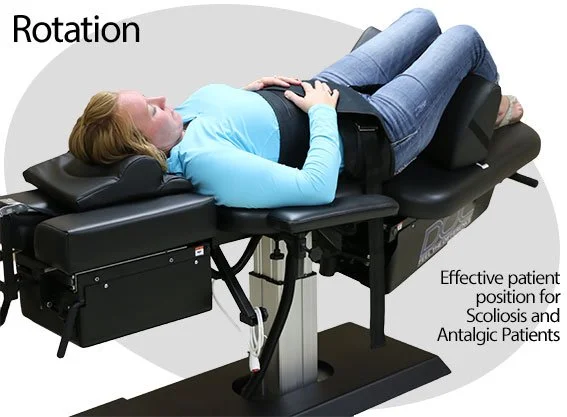
Lake Nona Family Chiropractic uses a state-of-the-art spinal decompression table delivered in 2026. This newer technology allows our team to provide controlled, patient-specific decompression protocols in a comfortable clinical setting.
A modern decompression table allows for more precise positioning, controlled force application, and gradual progression based on how the patient responds. This matters because patients with disc injuries, nerve irritation, degenerative changes, or postural compensation often need care that is specific, not generic.
The technology is important, but the clinical decision-making behind it is even more important. Our doctors evaluate the patient first, review imaging when appropriate, and determine whether spinal decompression is indicated or whether another form of care or referral may be more appropriate.
Why Expertise Matters in Spinal Decompression
Spinal decompression should not be performed simply because a patient has back pain or neck pain. It should be used when the examination, diagnosis, and patient history support it.
Frank Berzanskis, D.C. has completed advanced post-graduate training directly relevant to spinal decompression care, including orthopedic testing, lumbar and cervical spine evaluation, spinal disc pathology, MRI interpretation, spinal biomechanics, and case management of herniated and bulging discs.
This background helps our team better understand the relationship between symptoms, physical examination findings, imaging, spinal mechanics, and treatment planning. For patients with disc herniations, sciatica, radiculopathy, or chronic spine pain, that level of clinical reasoning matters.
What the Research Says About Spinal Decompression
Research on spinal decompression and mechanical traction is still evolving. Some studies show promising outcomes, particularly for pain reduction and function in carefully selected patients, while other guidelines note that more high-quality research is needed.
A 2022 study on non-surgical spinal decompression for subacute lumbar herniated discs found improvements in pain intensity and changes in herniated disc volume on MRI. A 2024 study comparing traditional motorized traction and non-surgical spinal decompression added to conventional physiotherapy found both approaches improved outcomes for patients with lumbar discopathy. Systematic reviews on lumbar traction suggest there may be short-term pain benefits for low back pain with or without lumbar radiculopathy, while research on cervical radiculopathy suggests traction may be helpful when added to physical therapy for certain patients.
At the same time, clinical guidelines emphasize that disc conditions often require careful diagnosis and that not every patient responds the same way. This is why Lake Nona Family Chiropractic uses spinal decompression as part of an individualized care plan, not as a blanket treatment for every case of back or neck pain.
What to Expect at Lake Nona Family Chiropractic
Your care begins with a thorough consultation and examination. We want to understand your symptoms, when they started, what makes them better or worse, whether pain travels into your arms or legs, and how your condition affects your daily life.
When clinically indicated, we may review or recommend imaging such as X-rays or MRI to better understand the structure of the spine and whether disc pathology, degeneration, stenosis, or nerve involvement may be present.
If spinal decompression is appropriate, your doctor will recommend a plan that may include:
Spinal decompression sessions
Chiropractic care when appropriate
Corrective exercise
Mobility work
Postural or ergonomic recommendations
Soft tissue therapies
Home care guidance
Progress reassessments
Treatment is typically comfortable and controlled. Many patients describe decompression as gentle stretching or unloading of the spine. The protocol may be adjusted over time based on response.
Who May Not Be a Candidate?
Spinal decompression is not appropriate for every patient. Certain conditions may require modification, medical clearance, or referral. These may include fracture, infection, cancer, advanced osteoporosis, certain surgical hardware, severe instability, cauda equina symptoms, progressive neurological deficit, or other red flags.
This is one of the reasons the examination is so important. If your case requires orthopedic, neurological, pain management, or surgical evaluation, our team can help guide you in the right direction.
When to Seek Care for Disc or Nerve Symptoms
You should consider an evaluation if you are experiencing:
Low back pain with pain traveling into the buttock, leg, or foot
Neck pain with pain traveling into the shoulder, arm, or hand
Numbness or tingling
Burning nerve pain
Pain that worsens with sitting, bending, lifting, or driving
Symptoms that have not improved with rest
Recurring flare-ups of back or neck pain
Known disc herniation or degenerative disc disease
Pain after a car accident, sports injury, or lifting injury
Seek urgent medical attention if you experience loss of bowel or bladder control, numbness in the saddle region, progressive weakness, fever with severe spine pain, unexplained weight loss, or severe pain after trauma.
Spinal Decompression in Lake Nona and Orlando
Lake Nona Family Chiropractic & Scoliosis Center provides advanced spinal decompression care for patients throughout Lake Nona, Orlando, St. Cloud, Kissimmee, Moss Park, Laureate Park, and the surrounding Central Florida communities.
Our goal is to help patients understand what is causing their symptoms, identify whether spinal decompression is appropriate, and create a plan that supports long-term function — not just short-term relief.
If you have been told you have a herniated disc, bulging disc, sciatica, degenerative disc disease, or nerve compression symptoms, spinal decompression may be worth discussing.
Frequently Asked Questions About Spinal Decompression
Is spinal decompression the same as surgery?
No. Non-surgical spinal decompression does not involve injections, incisions, anesthesia, or surgical removal of disc material. It is a conservative therapy designed to gently unload the spine.
Does spinal decompression help sciatica?
It may help certain patients with sciatica, especially when symptoms are related to disc pressure or nerve root irritation. A proper exam is needed to determine whether sciatica is coming from the spine and whether decompression is appropriate.
Does spinal decompression help herniated discs?
Spinal decompression is commonly used for disc-related symptoms, including herniated and bulging discs. Research suggests some patients may experience pain and functional improvement, though results vary and care should be individualized.
Do I need an MRI before spinal decompression?
Not always. Some patients can begin care based on history, examination, and clinical findings. However, MRI may be recommended when symptoms suggest disc herniation, nerve compression, trauma, progressive neurological findings, or when symptoms are not improving as expected.
Is spinal decompression painful?
Treatment should not be painful. Most patients describe it as gentle stretching or pressure relief. The force and positioning can be adjusted based on comfort and response.
How many sessions will I need?
The number of sessions depends on your diagnosis, symptom severity, chronicity, imaging findings, and response to care. Your doctor will recommend a plan after your evaluation.
Is spinal decompression right for everyone?
No. Spinal decompression is best for properly selected patients. Some conditions require a different approach or referral to another specialist.
Frank Berzanskis, D.C.
Trauma Qualified
MRI interpretation review Qualified
References
Choi E, Gil HY, Ju J, Han WK, Nahm FS, Lee PB. Effect of Nonsurgical Spinal Decompression on Intensity of Pain and Herniated Disc Volume in Subacute Lumbar Herniated Disc. International Journal of Clinical Practice. 2022;2022:6343837. doi:10.1155/2022/6343837.
Adar S, Apaydın O, Dündar U, Toktas H, Yesil H, Eroglu S, Eyvaz N. Comparison of the Effectiveness of Traditional Motorized Traction and Non-surgical Spinal Decompression Therapy Added to Conventional Physiotherapy for Treatment of Chronic Low Back Pain. Cureus. 2024;16(9). doi:10.7759/cureus.69610.
Vanti C, Saccardo K, Panizzolo A, Turone L, Guccione AA, Pillastrini P. The Effects of the Addition of Mechanical Traction to Physical Therapy on Low Back Pain? A Systematic Review with Meta-Analysis. Acta Orthopaedica et Traumatologica Turcica. 2023;57(1):3-16. doi:10.5152/j.aott.2023.21323.
Romeo A, Vanti C, Boldrini V, Ruggeri M, Guccione AA, Pillastrini P, Bertozzi L. Cervical Radiculopathy: Effectiveness of Adding Traction to Physical Therapy—A Systematic Review and Meta-Analysis of Randomized Controlled Trials. Physical Therapy. 2018;98(4):231-242. doi:10.1093/ptj/pzy001.
Kreiner DS, Hwang SW, Easa JE, et al. An Evidence-Based Clinical Guideline for the Diagnosis and Treatment of Lumbar Disc Herniation with Radiculopathy. The Spine Journal. 2014;14(1):180-191.