
Car Accident Injury Care in Lake Nona: What to Do First and Why Timing Matters
Motor vehicle collisions produce a distinct category of injury that often goes undetected in the hours immediately following a crash. Adrenaline and the body's acute stress response can mask pain, leading many patients to delay evaluation. In Florida, that delay carries a significant consequence: patients have 14 days from the date of the accident to receive initial care from a qualified medical provider, or they forfeit access to their Personal Injury Protection (PIP) medical benefits.
Lake Nona Family Chiropractic provides timely, thorough evaluation and treatment for auto-accident injuries. This guide outlines the legal time requirement, the clinical reasons prompt assessment is important, and the standards of care that protect both patient recovery and insurance eligibility.
The Florida 14-Day Rule
Florida operates under a no-fault insurance system. Under this system, a driver's own auto policy includes Personal Injury Protection, which covers medical expenses after a collision regardless of fault, up to a $10,000 limit.
Access to those benefits is conditional. To qualify, the patient must begin medical treatment within 14 calendar days of the accident. If this window is missed, the insurer may deny the PIP claim in full, leaving the patient personally responsible for all subsequent diagnostic imaging, examinations, and treatment.
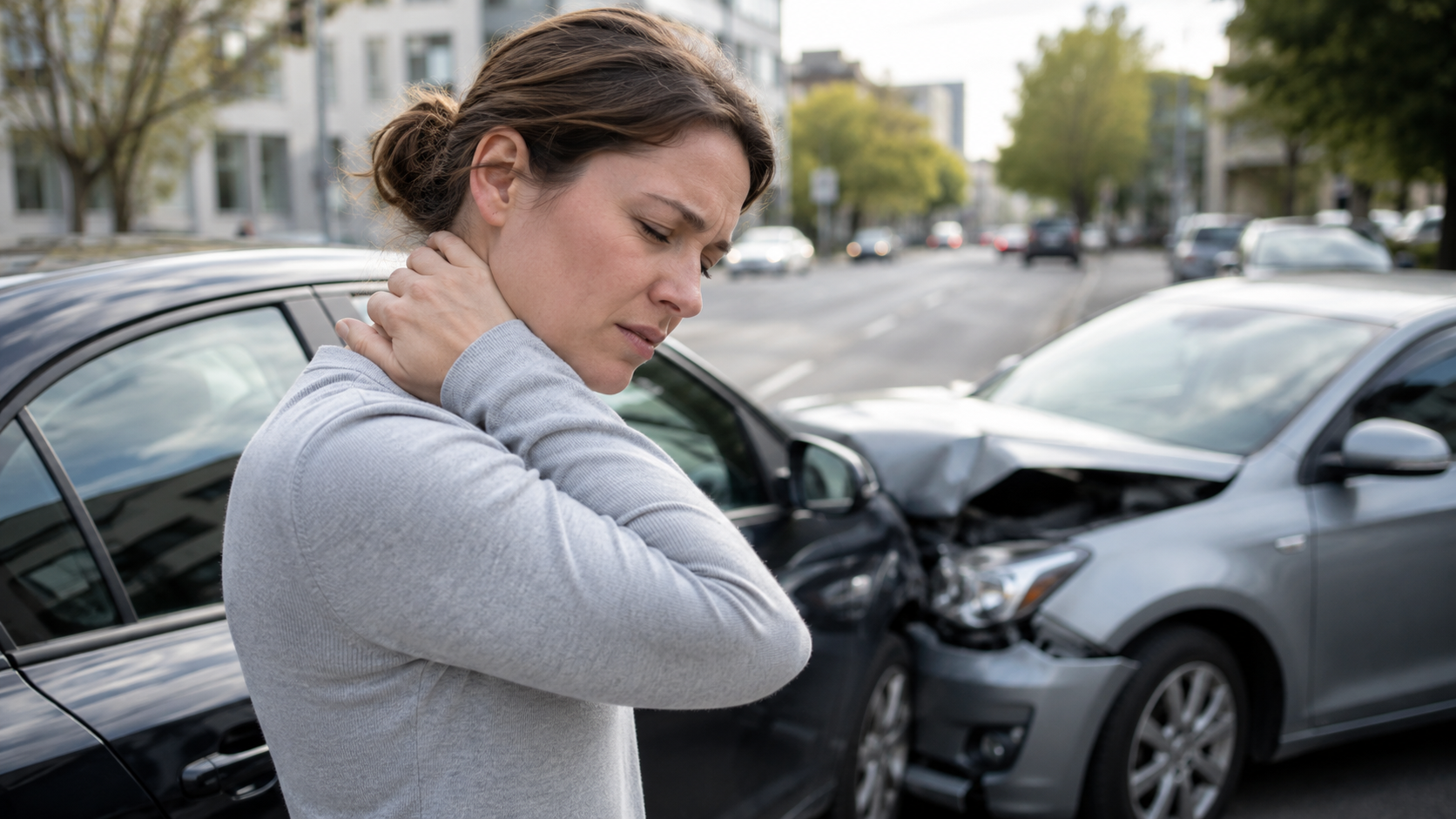
This requirement is frequently overlooked because many accident-related injuries are not immediately symptomatic. Soft-tissue trauma, whiplash, and spinal injuries often produce delayed onset of pain, surfacing days or weeks after the collision. Patients who feel well in the immediate aftermath may wait to seek care and unknowingly miss the deadline. For this reason, evaluation within 14 days is advisable even in the absence of obvious symptoms.
The Clinical Case for Prompt Evaluation
A chiropractor is a qualified provider under Florida's PIP statute, so an evaluation at our office satisfies the 14-day requirement. More importantly, prompt assessment addresses injuries that are commonly missed in standard emergency care.
Emergency departments are designed to identify and stabilize life-threatening conditions, after which patients are typically discharged. They are not structured to diagnose or manage the musculoskeletal and soft-tissue injuries characteristic of motor vehicle accidents — including cervical whiplash, disc herniation, joint dysfunction, nerve impingement, and ligament damage. These injuries, when left unaddressed, frequently develop into chronic pain and reduced function over the following months. Early, targeted assessment allows these conditions to be identified and treated before they progress.
Trauma-Qualified Clinicians With Advanced MRI Interpretation Training
The biomechanical forces involved in a collision — even at low speeds — affect the spine and nervous system differently than the injuries seen in routine practice. Accurate diagnosis and effective treatment require formal training specific to collision-related trauma, and our doctors have completed it.
Our clinicians are Trauma Qualified and MRI Interpretation Review Qualified. These qualifications are earned through coursework recognized for continuing medical education in joint providership with the State University of New York at Buffalo, Jacobs School of Medicine and Biomedical Sciences, and approved and recognized by Cleveland University–Kansas City, College of Chiropractic.
The training integrates graduate-level medical and chiropractic education in the triage and management of injured patients. It encompasses detailed history-taking, clinical examination, and advanced interpretation of MRI spine imaging — equipping our doctors to identify and differentiate disc pathology such as herniated, bulging, protruded, and extruded discs with precision. For the patient, this means injuries are evaluated against a rigorous academic standard, imaging findings are accurately correlated with the mechanism of the collision, and the resulting diagnosis is both clinically sound and well-substantiated.
These qualifications are publicly listed and verifiable through the US Chiropractic Directory (uschirodirectory.com).
Extensive Experience With Auto Injuries
Clinical experience is a meaningful factor in accurate diagnosis and effective treatment. Our practice has treated thousands of auto-injury patients throughout the Lake Nona and greater Orlando area, ranging from low-impact collisions to serious high-velocity crashes.
This volume of cases supports rapid recognition of injury patterns, an evidence-informed understanding of expected recovery timelines, and the clinical judgment to anticipate how injuries may evolve over the weeks following a collision. For the patient, this translates into more precise assessment and a more reliable course of care.
Rigorous Clinical Documentation
The quality of a patient's medical record has direct bearing on both clinical outcomes and insurance claims. Incomplete or imprecise documentation creates openings for insurers to reduce or deny benefits, particularly when records fail to establish a clear connection between the injury and the accident.
Our practice maintains thorough, accurate documentation from the initial visit forward — recording presenting symptoms, examination findings, diagnoses, and treatment progress in detail. This standard establishes a well-substantiated, accident-linked medical record that supports the patient's PIP claim or any subsequent legal case, while also providing a precise clinical roadmap for recovery.
Coordinated Care Through a Trusted Referral Network
Recovery from a serious collision often requires care beyond chiropractic treatment, including orthopedic specialists, neurologists, advanced imaging, or pain management. In cases where the patient was not at fault, experienced legal representation may also be warranted.
We have established a trusted network of medical specialists and personal-injury attorneys with specific experience in auto-accident cases. When a patient's situation calls for additional care or counsel, we facilitate appropriate referrals and coordinate the care so that no aspect of treatment is overlooked. This allows the patient to focus on recovery rather than managing logistics.
Recommended Steps Following a Collision
Seek evaluation within 14 days. Obtain care from a qualified provider promptly — even in the absence of symptoms — to preserve PIP benefits and identify injuries early.
Preserve documentation. Retain the accident report, photographs, insurance correspondence, and related receipts.
Exercise caution with recorded statements. Detailed statements to insurers are best deferred until the extent of injury is understood.
Adhere to the treatment plan. Gaps in care are commonly cited by insurers to dispute claims.
Request guidance on next steps. We can advise on specialist referrals or legal resources when appropriate.
Frequently Asked Questions
How long after a car accident do I have to see a doctor in Florida? Patients have 14 days from the date of the accident to receive initial care from a qualified provider. Missing this window allows the insurer to deny PIP medical benefits in full.
Should I be evaluated even if I feel uninjured? Yes. Many collision-related injuries, including whiplash and soft-tissue damage, produce delayed symptoms because adrenaline suppresses pain in the immediate aftermath. Early evaluation protects both health and insurance eligibility.
Does a chiropractic evaluation satisfy Florida's 14-day requirement? Yes. A chiropractor is a qualified medical provider under Florida's PIP law, so being seen at our office meets the deadline and initiates proper documentation.
Will auto insurance cover chiropractic treatment after an accident? Under Florida's no-fault system, PIP coverage generally pays for medically necessary treatment provided care begins within the 14-day window. We assist patients in understanding how their benefits apply.
Do you work with attorneys when the accident was not my fault? Yes. We maintain a referral network of personal-injury attorneys and medical specialists experienced in auto-accident cases.
What qualifies your doctors to treat serious auto-accident injuries? Our clinicians are Trauma Qualified and MRI Interpretation Review Qualified through coursework recognized for continuing medical education in joint providership with the State University of New York at Buffalo, Jacobs School of Medicine and Biomedical Sciences, and approved by Cleveland University–Kansas City, College of Chiropractic. This training covers trauma triage and advanced MRI spine interpretation, allowing for precise diagnosis and documentation of collision-related injuries.
What are my options if more than 14 days have passed? Options may still exist, particularly when pursuing a claim against an at-fault driver. We can help assess the appropriate next steps.
Schedule an Evaluation
Delayed care is the most common and consequential mistake following a motor vehicle accident. The 14-day window is brief, delayed-onset injuries are common, and early clinical decisions significantly influence long-term recovery.
Patients who have been involved in a collision in Lake Nona, Orlando, or the surrounding area are encouraged to contact Lake Nona Family Chiropractic to schedule an evaluation. We protect PIP eligibility, document injuries thoroughly, develop trauma-specific treatment plans, and coordinate referrals to additional providers or attorneys as needed.
This article is for general informational purposes only and does not constitute legal or medical advice. Florida's PIP and no-fault insurance laws are subject to change, and every accident is different. For guidance specific to an individual situation, consult a licensed attorney and a qualified medical provider.